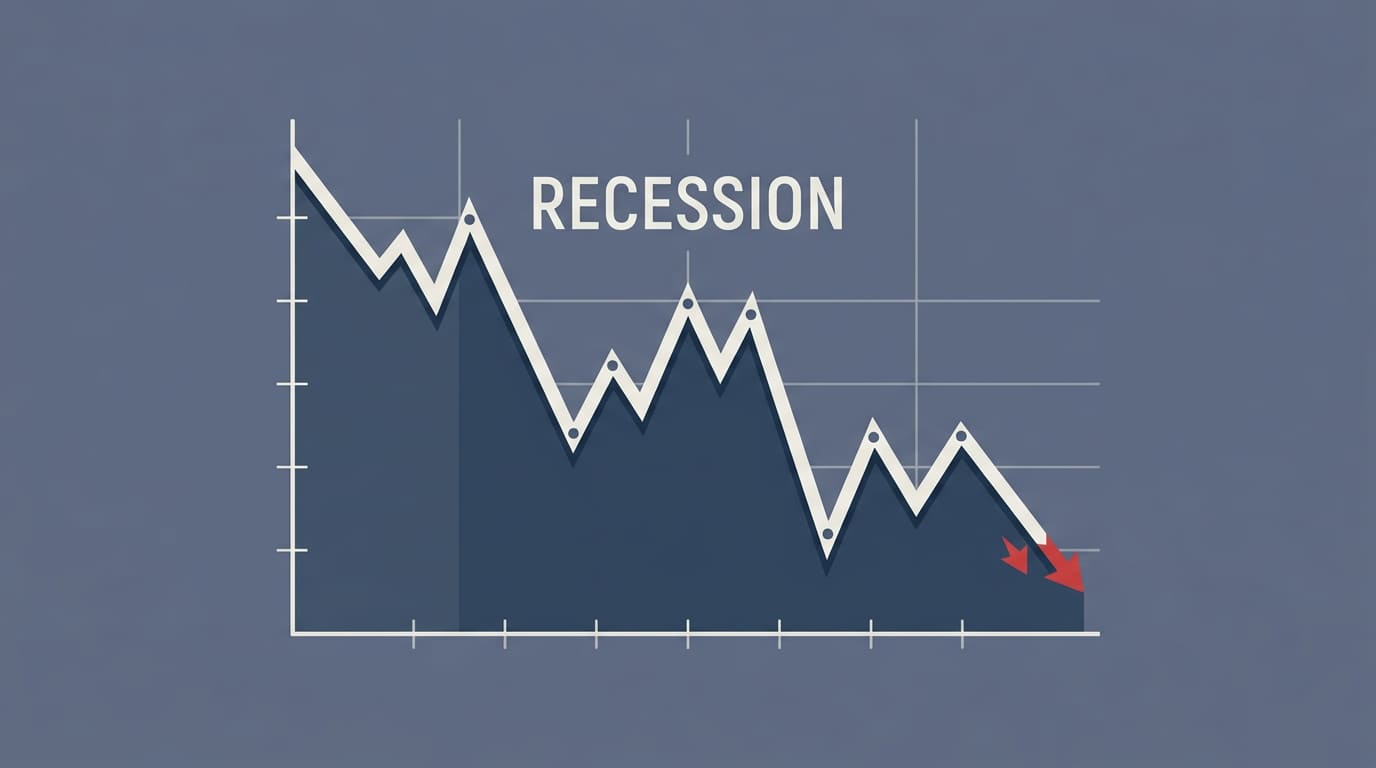
March Market Meltdown: Is the West Asia Conflict Triggering a Deeper Recession in India?
The financial markets are bleeding red, your mutual fund portfolio is down 10%, and the news is flooded with images of escalating conflict in West Asia. As we navigate through March 2026, a question that was unthinkable just six months ago is now lurking in the minds of investors and policymakers alike: Is India staring down the barrel of a recession?
While the word "recession" might seem extreme for the world's fastest-growing major economy, the data coming out of March suggests that the West Asia conflict has triggered a "triple whammy"—an energy shock, a currency crisis, and a foreign capital exodus—that is rapidly cooling the economic engine.
Here is a deep dive into how the geopolitical fire in West Asia is threatening to spark a deeper economic slowdown in India.
Part 1: The "Triple Whammy" Explained
In a recent report to the Parliamentary Standing Committee on Finance, the Department of Economic Affairs flagged a "triple whammy" of risks emerging from the West Asia conflict: surging crude prices, extreme market volatility, and maritime delays . In March 2026, all three have materialized with a vengeance.
1. The Energy Shock: From $69 to $117 in 30 Days
The most immediate and brutal impact has been on oil prices. The Indian basket of crude oil, which averaged a manageable $69.01 per barrel in February, skyrocketed to $117.09 in March—a staggering 69.7% increase . The situation worsened as the month progressed, with the Indian basket crossing $156 per barrel by mid-March following attacks on energy infrastructure in Iran and Qatar .
The disruption at the Ras Laffan Industrial City in Qatar, a critical LNG export hub, has reduced Qatar’s export capacity by roughly 17% and could take up to five years to fully repair . This is a direct hit to India, which relies on long-term LNG contracts with Qatar for a significant portion of its energy needs . Officials in Saudi Arabia have warned that if disruptions persist, crude could hit $180 per barrel .
2. The Market Meltdown: FPI Exodus Hits Record Highs
When oil spikes, foreign investors run. The last two weeks of March have witnessed one of the most sustained sell-offs in Indian market history. Foreign Portfolio Investors (FPIs) have pulled out a net ₹88,180 crore (approx. $9.6 billion) from Indian equities in March alone . This marks the highest monthly outflow of 2026 and has pushed total FPI outflows past the ₹1 Lakh Crore mark for the year .
As VK Vijayakumar, Chief Investment Strategist at Geojit Investments, noted, multiple factors—including global equity market weakness, rupee depreciation, and elevated crude prices—have combined to intensify this selling . The financial services sector has been the hardest hit, bearing outflows of over ₹31,000 crore .
3. The Rupee Under Pressure
With oil import bills surging and foreign capital fleeing, the Indian Rupee has come under immense pressure, breaching the ₹92 per USD mark . A weaker rupee makes imports more expensive, further fueling inflation and widening the current account deficit (CAD).
Part 2: Will This Trigger a Recession?
The term "recession" implies a significant contraction in GDP for two consecutive quarters. While India is likely to avoid a technical recession (negative growth), the conflict is forcing economists to sharply mark down their growth estimates.
The CEA's "Fairly Significant" Warning
Chief Economic Adviser (CEA) V. Anantha Nageswaran has been candid about the risks. He briefed the Parliamentary Standing Committee that simulation models show a sustained spike in oil prices could have a "fairly significant" impact .
-
The Baseline: India was aiming for 7.4% GDP growth in 2026-27 with inflation at around 2% .
-
The War Scenario: If crude oil prices remain at $130 per barrel for two to three quarters, the CEA warned that GDP growth could be dragged down to 6.4% .
-
The Triple Hit: Inflation would spike to 5.5%, the Current Account Deficit (CAD) would widen from 1.2% to 3.2%, and the fiscal deficit could deteriorate from 4.4% to 5.6% .
While 6.4% growth is still healthy by global standards, it represents a full percentage point drop from the baseline. For a country where job creation depends on 7%+ growth, this slowdown constitutes a "growth recession"—where the economy slows so much that it feels like a recession to the average citizen.
Moody’s Weighs In
Global rating agency Moody’s has echoed these concerns, stating that a prolonged conflict could knock 1 percentage point off India's GDP while pushing interest rates and inflation up by 1.5 to 2 percentage points . Moody’s emphasized that India is among the countries with the highest structural exposure to oil price shocks, with crude imports accounting for 3.6% of GDP .
Part 3: How Are We Feeling the Pain?
Beyond the macroeconomic numbers, the impact is already visible in specific sectors and your daily life.
1. Fuel and LPG Prices
While the government has absorbed much of the shock to protect voters from a sudden spike in regular petrol prices, the cracks are showing. Oil Marketing Companies (OMCs) have hiked premium petrol prices by up to ₹2.35 per litre and raised bulk diesel prices for industrial users by a massive ₹22 per litre . The price of domestic LPG cylinders was also hiked by ₹60 earlier in March .
2. Supply Chain Chaos
The conflict has effectively created a blockade situation near the Strait of Hormuz, through which nearly 85% of India's crude oil imports pass . This is not just an energy issue. Exporters are reporting higher freight rates and insurance premiums, and shipments of agricultural staples like rice to key markets in the Middle East are facing severe logistical bottlenecks .
3. Fertilizer Threat
India's agricultural sector faces a unique risk. The country imports over 70% of its urea from West Asia (Oman, Saudi Arabia, Qatar) . Furthermore, domestic urea production relies heavily on LNG imports, which are now threatened. To avert a crisis ahead of the Kharif sowing season, the government has issued an order prioritizing natural gas supply to fertilizer plants .
Part 4: What It Means for Your Portfolio
If you are an investor, the March meltdown is a stark reminder of India's vulnerability to global shocks. Here is how you should navigate the uncertainty:
1. Brace for Volatility
Analysts expect the volatility to persist. "Market sentiment remained cautious amid persistent Middle East tensions during the week, with elevated crude oil prices, and continued FII selling," said Vinod Nair, Head of Research at Geojit Financial Services . A durable recovery is unlikely until geopolitical risks ease .
2. Watch the Domestic "Shock Absorbers"
The silver lining is the strength of Domestic Institutional Investors (DIIs). Unlike in 2013, India now has a robust domestic mutual fund industry and EPFO that are absorbing the FPI selling. However, if the slowdown deepens and retail SIP flows dry up, this support could weaken.
3. Sectoral Strategy
-
Avoid: Sectors with high FPI ownership (Financials) and sectors heavily dependent on imported raw materials.
-
Consider: Companies that benefit from government spending on infrastructure (to counter the slowdown) and sectors that are part of the self-reliance (Atmanirbhar Bharat) push .
-
Hedge: Continue to hold gold as a hedge against rupee depreciation and geopolitical uncertainty.
The Bottom Line: Recession or Resilience?
So, is the West Asia conflict triggering a recession in India?
Probably not a technical recession. India’s fundamentals are stronger than they were a decade ago. The government has been proactive in diversifying crude sources, and the industry is adapting to supply chain disruptions .
However, a severe "growth slowdown" is almost certain. The difference between a 7.4% growth economy and a 6.4% growth economy is the difference between robust job creation and stagnant wages, between a booming stock market and a sideways market.
The next few months will be a litmus test for India’s resilience. With oil prices expected to remain elevated, the fiscal math will get tighter, interest rates may stay higher for longer, and corporate margins will be squeezed. For the average investor, the era of easy double-digit returns may be over for now. The priority has shifted from "wealth creation" to "wealth preservation" until the skies over West Asia clear.
Disclaimer: This article is for informational purposes only and does not constitute investment advice. Always consult with a certified financial advisor before making investment decisions.
Related Articles
Red Sea Supply Chains Cut Off: Which Industries Face the Biggest Risk?
The ongoing crisis in the Red Sea and Strait of Hormuz has created a "dual chokepoint" disruption, f...
Read More → EconomyOil at $115: How the Iran-Israel Conflict is Reshaping Global Energy Markets
Read More → EconomyFederal Reserve Meeting March 2026: Interest Rate Decision Analysis
Read More → EconomyBeyond Brent: Why Natural Gas Prices Are Spiking in Europe
European natural gas prices have more than doubled in March 2026, with Dutch TTF futures hitting €...
Read More →